Pages

Showing posts with label Essay. Show all posts

Monday, March 19, 2018

The Importance of "The Catcher In The Rye"

The interesting and short-term of our Forbidden books class, we focused the banning of books for reasons of Diversity. Books get banned all the time because they interfere with one or more opinions. Though this unit was about diversity in books, this action project was about the reason of banning the books we've been reading throughout the class. I decided to read The Catcher In The Rye by J. D. Salinger, and I think this book is an amazing piece of literature. Throughout this AP you will get to see what The Catcher In The Rye is about, why it's been banned, and exactly why it shouldn't be a banned book. I really enjoyed reading this novel and this class; it's important to know why books are banned in the first place, and what the effects are of banning any book. I hope you enjoy a fruitful argument against the unjust banning of The Catcher In The Rye.

The Importance of The Catcher In The Rye
A book about the pitfalls of a sixteen-year-old, a tour of the world through the eyes of a teenager who struggles with maturity and responsibility has been banned: why? The Catcher In The Rye has been critically acclaimed as one of the best books ever written, and yet it has been banned on several occasions for many reasons. J. D. Salinger’s famous novel revolves around a 16-year-old boy named Holden who is kicked out of his school for failing his classes, so he decides to hit the road and head to New York City, where he gets a cab goes to a hotel to stay at for a couple days while he waits to be back at home with his parents on Wednesday. He travels through New York, meeting up with new and old friends, and finally meets up with his younger sister by sneaking into his house. He tells his sister about getting kicked out of school and later tells her that he needs to leave and never come back. This makes his sister want to go with him, as she meets him with packed bags, but Holden refuses and instead takes her to the zoo to go on a merry-go-round. This novel really explores the inner mind of somebody who is lost in the world and demonstrates the subject of responsibility to the readers. J. D. Salinger wrote a book that is viewed as controversial because it speaks of a minor participating in drinking, drugs, foul language, and sexual activities. This book is themed around the idea of the title of the book, keeping children’s innocence and don’t expose them to things that can ruin their motivation. The theme also speaks a lot on how responsibility hits young adults, and how it’s important to recognize that early on. Despite all the hatred towards this fantastic piece of literature, The Catcher In The Rye shouldn’t be censored or banned in any way.


Interestingly enough, The Catcher In The Rye was identified as a banned book because of the suggestive themes that tell a story about a minor participating in things that minors should not be participating in. Many people weren't happy with how this sixteen-year-old was acting, going as far to ban it from most high schools in the U.S. from 1966-1975. Ten years later more controversy arose about the book when it was assigned by a teacher in a local literature class. Parents objected to the book, and the school board banned the book, swaying parents in New Jersey to complain about to their school board about the book. They labeled the book as "explicitly pornographic" and "immoral".(Sova 2) This caused this New Jersey school board to ban the book for everyone but Advanced Placement students.(Ross) This book was banned in schools all across the U.S. because of its use of vulgar language and sensitive themes, and this hurt people on a religious level. Many people didn't agree with the homosexuality in the book, the harsh language both weren't part of many people's religions and the "godlessness" of the main character, Holden Caulfield. This book was definitely banned for religious reasons. 
Image result for The Catcher in The RYe
"Catcher-in-the-rye-red-cover" Bantam 1/14/06


The Catcher In The Rye is a very vulgar book that can be very offensive to many religions, and a good example is when Holden says, "You take somebody that cries their goddam eyes out over phony stuff in the movies, and nine times of ten they're mean bastards at heart. I'm not kidding" (Salinger 181). This quote clearly demonstrates the book's non-humorous ways of harsh language; The Catcher In The Rye is absolutely littered with quote even more or just as vulgar as this very quote. For many religions, language like this isn't ever accepted and is typically frowned upon. Bad language is not welcomed by most religions such as Jehovah witnesses, Some Christians, Catholics, and Islam. Another quote that many religions find profane is "In the first place, I'm sort of an atheist. I like Jesus and all, but I don't care too much for most of the other stuff in the Bible. Take the Disciples, for instance. They annoy the hell out of me, if you want to know the truth. They were all right after Jesus was dead and all, but while He was alive, they were about as much use to Him as a hole in the head. All they did was keep letting Him down" (Salinger 130). This clearly shows Holden's negative outlook on the Bible. Of course, when something negative is being said about a religious book, many religions wouldn't want to be very accepting of the book. Many were upset that Holden was speaking badly about the Disciples, who are pretty big people for a lot of religions and the Bible in general.

Though many religions would have plenty reasons for motivating the banning of this novel, The Catcher In The Rye should never be banned. The most important reason for this book to never be banned anywhere is, many religions and people who aren't big fans of vulgar language don't ever need to read the book. If a book is banned or determined to be unsuitable for a religion or group, then the book is fine to be banned in that religion. Other outside people shouldn't be restricted access to the novel because of that religion or group. People who are offended by The Catcher In The Rye cannot inflict their opinions upon the vast majority of people. The author, J.D. Salinger has settled multiple lawsuits on account of his own books, including one filmmaker who directed a film loosely based on another popular book of Salinger's, Franny and Zooey (Salingerincontext). Salinger censored things that were clearly unfair for other people to use but hasn't spoken about the banning of his books. Salinger has good reason not to speak on the censorship of his books because books are our freedom of expression, speech, and ideas. A world that has limited restrictions is a free world where people can do what they want, but banning that book is silencing a voice. Banning a book is making someone quieter, then the balance is thrown off. Finally, books should never be banned because reading is subjective, not every person will take a line in a book offensively. The lines written in a book don't apply to everyone, so why enforce the banned on everyone, or even a majority? Overall, banning books isn't fair to everyone, and banning a book isn't freedom.

Throughout history, books have been banned for various reasons, whether they were banned because of harsh language, suggestive themes, themes against religion, or just plain hate against a certain group of people they were banned. The world is pretty cut and dry; if something can be considered offensive in anyway, then it will be considered offensive. When an author writes a book, there will be some people who don’t agree with what the book is saying, it will become hurtful if it is taken to heart. Books are stories and opinions, and if one person doesn’t like what a book is about, they are certainly not being forced to read it. The Catcher In The Rye is a banned book


Works Cited
Angelica. “J.D. Salinger's Lawsuits and Censorship.” Salingerincontextorg, salingerincontext.org/j-d-salinger’s-lawsuits-and-censorship/.

GradeSaver, 30 September 2009 Web. 20 March 2018.

Ross, J.J.. Soman Chainani and Adam Kissel, October 10, 2008 and ed. "The Catcher in the Rye Catcher in the Rye: A History of Censorship". 

Saturday, October 28, 2017

Photos: The Holy Grail of Preservation

The final unit of our Population class we discussed and learned about how populations grow and change. We took a trip to the Peggy Notebaert Nature Museum to view the change of population among butterflies along with seeing the change of Chicago from a nature preserve. For our last unit we created a very short and small one day action project that focused on methods of preservation. I decided to write a short essay about photography and what it has done for us in terms of preservation. I hope you enjoy; thank you. 

Photography has been around for a long time without a doubt; with the oldest camera being made in the 1500s. This camera was called the Camera Obscura and was the first pinhole camera. This camera would let in a small amounts of light through a small hole in a very dark area. The image would be projected onto the wall and would be traced out with pencils or paint. Photographs and pictures are a simple way of preserving the look of something; they are a visual time stamp.

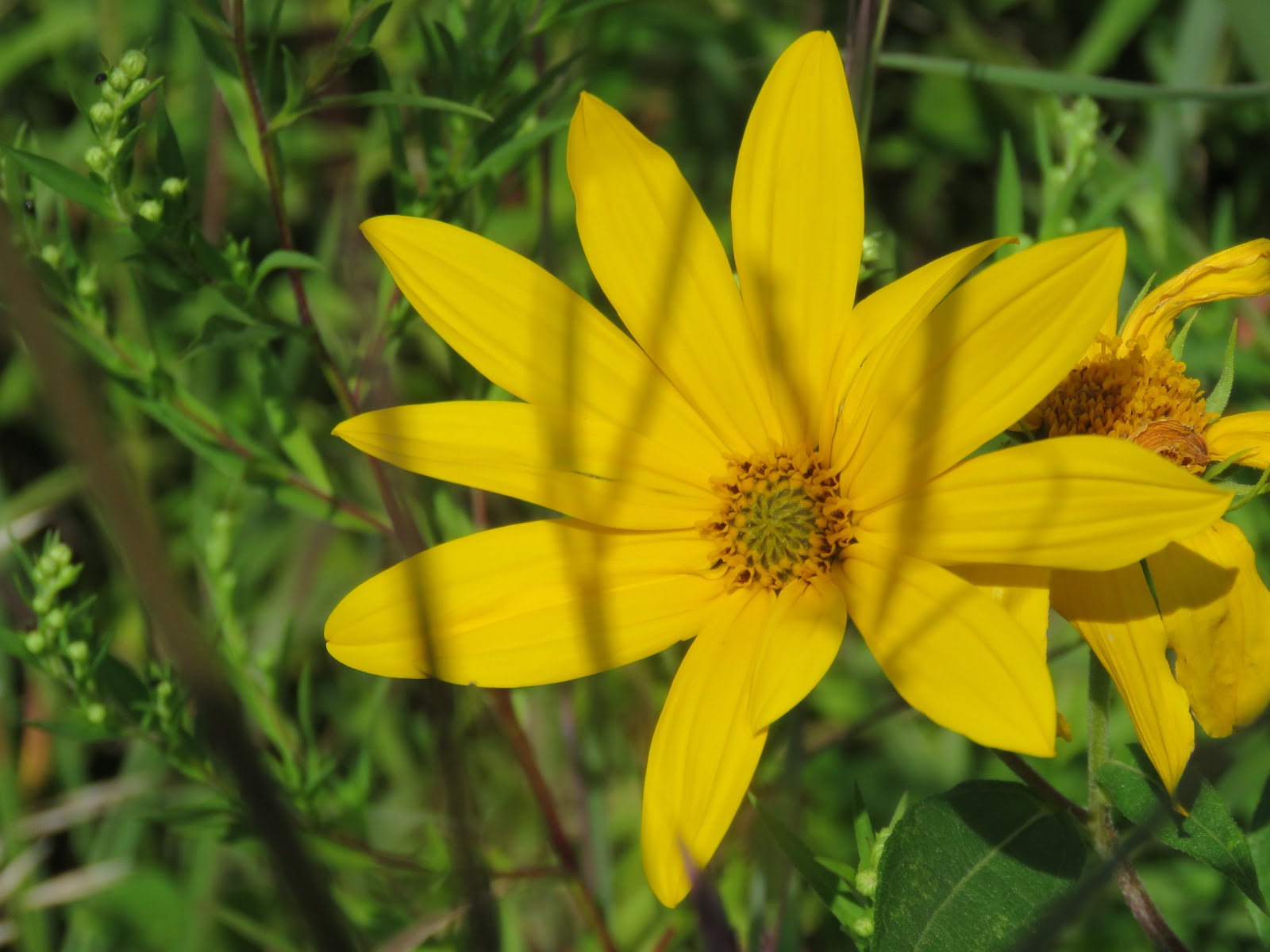
In the image below we are clearly able to see what it's attempting to show. Photography is great for preserving the specific look of a thing compared to a written description. If someone were to write about the look of the yellow flower it would probably take a long time to get all the specifics of the flower. Taking a photograph is a much simpler way obtaining the the look of something with detail and precision. A picture is worth one thousand words. Without photographs, many people wouldn’t know what a polar bear looked like.


IMG_2391.JPG
IF 2017 "Yellow Fellow"

Photography is a very useful tool as a preservation method. Photography can help scientists get an accurate description of an organism's physical traits, the habitat it lives in, and the organism’s resources. Drawing works the same as photography but it’s less efficient and can’t gather specifics and dimensions like photos can. A still photo for the most pat can’t be wrong with the the dimensions of a thing, drawing can be inconsistent and the look could be changed due to human error. Sight is one of the most useful traits for some organisms; making photographs very helpful for seeing something that is potentially dangerous without actually going face to face with it. Photography has helped us preserve the look and the behavior of organisms for a very long time.

Wednesday, May 31, 2017

WARNING GMOs INCLUDED

In our final unit of our Food class we focused on percent changes and GMOs. In this action project I present my opinion on GMOs and why they should be banned. I present some facts on how they negatively affect communities, farmers, and the environment. I really enjoyed this unit because we gt to see some great field experiences, like one to the Green City Market. I hope you enjoy.

Food: GMO Debate- IF from GCE Lab School on Vimeo.

95% of the United States’ grown sugar beets are genetically modified along with 94% of soybeans also being genetically modified. Soybeans are a large part of the American diet, so having this alarming amount of genetically modified soybeans brings up risks that can still be solved. GMOs should no longer be put into the diets of the global population. GMOs are expensive to both the farmer and the people buying it. GMOs make food desserts more common while also creating monocultures.

Genetically modified foods can be very expensive for farmers and various buyers of the foods. Farmers are sinking into debt with their equity decreasing and their debt levels rising 5.2% in 2017. Growers first sign a contract with a company that will sell their food but the equity rates keep getting lower and lower so the farmers fall into debt and they can’t leave the contract otherwise they won’t get paid. Genetically modified food is also affecting consumers of the products. Most foods that are genetically modified tend to be unhealthy, which is difficult for families to deal with. When you are a low income family your number one choice would be to buy food that is both filling and cheap instead of the expensive and small. The filling and cheap foods are so mass produced that the small healthy foods need to compete against the mass produced unhealthy foods. Still being a low income family you eventually need to cope with the unhealthy diet and obtain expensive medication. None of this would be necessary if GMOs were banned in food products.

GMOs can also cause food deserts where it can be difficult to obtain healthy foods. Food deserts typically exist in low income areas where people don’t have the money to buy locally grown food that isn’t just genetically modified foods that have been stuffed with preservatives. The low income areas usually obtain their food from cheap places that is filling and cheap, like I mentioned in the last argument the filling and cheap meals aren’t local and aren’t healthy causing these families to be unhealthy or overweight. GMOs lead to food deserts because genetically modified foods get put into low income communities so they have lower prices than organic food. Organic healthy food doesn’t sell at high prices when you can still get inorganic GMO food at low prices in low income communities, therefore making unhealthy food deserts.

Genetically modified foods are also creating monocultures. Monocultures are when one type of plant is being grown way too much and if a disease were to happen then it could possibly destroy that entire species for a short time period. GMOs cause monocultures by creating a high demand for one type of food like corn. This high demand of corn is making farmers grow more corn; the more corn grown the higher the risk of a disease wiping out the large amount of GMOs. Potatoes in Ireland fell due to a monoculture in the 1840s and the Irish starved because of it; this will most likely not happen as drastically as it happened to the Irish but it will impact us if corn gets wiped out. Corn is in everything from pop tarts, batteries, magazines, and cereal. Monocultures definitely will not be helping out our global food system.

This graph represents the rising amounts of corn being grown in Iowa compared to other foods. Orange represents the total  amount of cropping land corn is taking up. This data is only taking place in the years of 1956 - 1962. The percentage of total cropping land being occupied by corn is at 60% in 1956 an it had gone up to 64% in only 6 years; this is a percent increase of 4%. Both percentages show that we already have over half of all the pants being grown into a monoculture.

"Graph" IF 2017
A common argument use among GMO supports is that using GMOs are cheaper than growing organic food. It may at first seem this way but there are actually a lot of underlying cost to farmers. Farmers are buying GMOs, pesticides, and herbicides to grow the best plants. The more we implement GMOs into our food the more costly it gets for farmers. 

Genetically modified food should no longer be dispensed to the public because even if it is labeled it will inevitably be the number one choice for a lot of lower income people. These low income people suffer from both an unhealthy diet and can’t travel to get a better one when living in a food desert. Above all genetically modified foods are still being used today, but the underlying truth of the damage it has caused has greatly affected everyone. GMOs need to be removed from the shelves of stores and in the hands of fast food companies and replaced with local organic foods that are safe for everyone. GMOs need to be removed from food for the betterment of our low income communities and to lower the risk of a food wipe out.

Food, Inc. By Robert Kenner, Robert Kenner, Robert Kenner, Richard Pearce, Eric Schlosser, Eric Schlosser, Melissa Robledo, William Pohlad, Jeff Skoll, Robin Schorr, Diane Weyermann, Elise Pearlstein, Elise Pearlstein, Kim Roberts, Kim Roberts, Michael Pollan, Michael Pollan, Gary Hirshberg, Joel Salatin, and Mark Adler. Dir. Richard Pearce. N.p., n.d. Web. 29 May 2017.

Weise, Elizabeth. "Genetically engineered foods Q & A." USA Today. Gannett Satellite Information Network, 28 Oct. 2012. Web. 29 May 2017.

"Assets, Debt, and Wealth." USDA ERS - Assets, Debt, and Wealth. N.p., 17 Mar. 2017. Web. 29 May 2017.

Wednesday, April 26, 2017

Growing a Guerrilla Garden

In our first unit of our new class Food we focused on what plants do to survive, the chemistry of plants, and calculations to focus on what would would be good plants for a garden. This unit really showed me how important some small plants are to this huge world of 7 billion people. I really enjoyed learning through this unit and going on a field experience to learn about how it is to supply food that is locally grown. More on the science side of this unit, we learned about how plants take in nutrients, how plants work together to "co-evolve", and what plants defend themselves along with hurt each other. I hope you enjoy.

"Raised bed" July 31 2007 Srl 

Plants might not seem to be the most exciting type of organism in the world, but they certainly do pack a punch when it comes to defending themselves, attacking others and overall fighting for survival. In order for plants to survive a healthy life in a garden they need the right amount of growing area, other plants in the area that work well with the plant, and the necessary nutrients they need to live.

This garden will be in the North side of Chicago in my front yard and will be outside with the elements to support it along with me caring for the plants. My garden will be in the front portion of my house, this portion is 6 ft x 4 ft so I have a total of 24 sq ft to use for my garden of ten plants. I decided to put these ten plants into my garden: beets, beans, carrots, cauliflower, eggplant, corn, celery, garlic, lettuce, and onions. The most important plant in this garden to help out all the other plants are the nitrogen fixer that is the beans. All types of legumes (beans are legumes) are nitrogen fixers which means that the nitrogen needed for the plants gets to those the easiest and quickest, allowing the other plants to take more nitrogen from microbes. Plants that stand tall like the corn are excellent for the beans to grow up, the relationship/symbiosis for the corn and the beans is mutual-ism because they are both helping each other survive.

Also while learning about plants’ survival and companionship we read the book One Straw Revolution and learned from the author (Masanobu Fukuoka) about his natural farming methods. Fukuoka's methods included not using any pesticides, herbicides, mechanical plowing, and chemical fertilizer. For my garden I should be able to bypass using the pesticides, herbicides, mechanical plowing, and chemical fertilizer; my garden wouldn't require any of these potentially harmful methods. My garden is only 24 square feet so plowing wouldn't be necessary and I wouldn't want to be eating the chemicals from the plant. I should be fine going all natural like Fukuoka.

Now to get more focused on the math and science part of creating a garden and growing plants for the garden. I plan on planting a garden in my front yard in the area that is 72 in x 48 in which is an area of 3,456 in squared, which is more than perfect for planting more than 10 plants. I also included three different containers (Bucket, box, and bottle) that I could grow plants in; with one of the containers having the total volume of 283.73 inches ( cubed, another one having a volume of 265.46 inches cubed, and the last one having a volume of 753.05 inches cubed.This means the total volume of them all is 1,302.04 inches cubed.
Calculations:
Pi x 4.25 squared x 5 = 283.73 in cubed Total = 1,302.24 in cubed
Pi x 3.5 squared x 8.25 = 265.46 in cubed
Pi x 5.75 squared x 7.25 = 753.05 in cubed

I also found that the total surface area of the three containers was 975.08 inches squared. Another important step to keeping a garden alive is making sure your plants are getting the right nutrients. I found I had a few unbalanced nutrients in my soil so I knew that I needed to change and monitor my planting soil. These calculations showed be how much of each nutrient I needed to add according to the size of my garden.

Nitrogen = 7 lbs /100 sq ft = 1.68 lbs for 24 sq ft
Phosphorus = 5 lbs/100 sq ft = 1.2 lbs/ 24 sq ft
Potassium = .5 lbs / 100 sq ft = .12 lbs/ 24 sq ft

I really enjoyed doing this project because it really showed me the power of plants and why they are so important to our society. If one plant species like corn gets wiped out we won’t have magazines, Twinkies, skateboards, or beef. I would really love to implement a garden into our home, and after doing this project I think I will, especially after getting so informed about plants and what they need to live. I might not be able to follow the exact garden plan I had shown earlier because I might not have the necessary resources to build my ideal garden.

Sunday, February 26, 2017

One Step to Solving Pollution

In this final unit of our Fuel class we focused on pollution, where it comes from, how is it made, and how to get rid of it. One very dangerous form of pollution is excess carbon. Everyday the world's carbon level is rising, which we talked about in our previous class Water that a large amount of carbon is being put into the atmosphere. Right now we are at dangerous levels that aren't reversible like 400 ppm of carbon when we are supposed to be at 350. That's why this unit was really important to focus on how we can solve the problem and focus on the future of our world. I really enjoyed learning about how I can reduce my carbon footprint. I hope you also see the benefits of reducing your carbon footprint while reading this essay.


Works Cited

footprintnetwork.org , published 2017, viewed - 2/24/17 “Footprint Calculator”  

terrapass.com, published 2017 viewed - 2/24/17 “ How emissions reductions projects work”  

epa.gov, published 1/24/2017 - 2/24/17 “Greenhouse Gas Equivalencies Calculator

flickr.com published July 8, 2008 viewed 2/26/17 - Steven Vance- "Bike Bicycle Symbol"

commons.wikimedia.com published April 2 2016, viewed 2/26/2017 - Karlis Dambrans "Toyota Prius" 

Thursday, February 23, 2017

My Creator

In this final unit of my class Who am I? we focused on Doubt and dream. In this last Action project we were assigned to make a dream catcher and explain what it represents to us. I really enjoyed how in this unit we had many discussions about what our own experiences with dreams were like and how that impacted our lives. I was assigned any essay/reflection to write so we could completely evaluate what what me us ourselves an what is our Creator.

The center of a dream catcher represents somebody’s creator or bliss. In the center of my dream catcher I have a piece of one of my favorite photographs, this is somewhat my creator because I like to do photography and it makes me who I am. Therefore photography is the creator of who I am. I chose to put my favorite photo in because it represents what I want in the future- my best photo will lead to even more good photos. I want my future to be photos as a hobby, and a side job that I don’t want to get paid for, this is why this photo is so important to me. I want for the catcher to take away some of the unfortunate and negative thoughts that have been happening to me lately. I want it to take that away so I can focus on things that I want in the future like better cameras and taking better photos. When I was younger I was always worried about the future, so I  held this down with a lot of repression that wen to the unconscious.

For the threads making up the loop I used dark blue thread to represent what I don’t know and how I don’t know. I wanted this to be the base color of the hoop because I feel as if I wanted to represent the good future letting things in as dreams (hence I don’t know the future) while bad things in the future could be held back into the hoop to burn in sunlight. I made the bottom hanging thread out of brown thread because to me brown represents strength and determination, I wanted a good future in photography leaded by strength and determination. I made four with one bead on each to represent a strong stable future because that’s how I want my future in photography to be. Some good things that I want the dream catcher to let through would be to own a clothes business and do photography as a background. I made the inside purple thread because purple is my favorite color so I want something I like to be the barrier between my good hopes and dreams between things I don’t want. Otherwise it’s like hiring a security guard that looks super shady. I had accidentally made the center of my dream catcher look like a crucifix, I'm not religious so it doesn't line up with me. I am agnostic so I don't know if I want to believe in a god.

"dream catcher" IF 2017

I had a dream only a couple of weeks ago that displayed a lot of good fortune and hope for things that I want. My dream had me and my brother walking on the underpass of a bridge where two people wearing my favorite clothing brand we loading some of that brand’s clothes into a black van. I was super excited and I asked one of them if that was what I had really been seeing, then the person tossed me a hat without saying anything but gave me a cheery smile. Then the other person got in the car and said we could have the rest of clothes they left behind. I hope more dreams like this happen so I could more focus on what I want. Around the time I had this dream I had been just staring at things that I had wanted.
"Dreamcatcher" IF 2017

Friday, October 21, 2016

The U.S and Namibia- Gender Equality

On our second unit in our MDGs & You class we focused on grasping a total understanding on gender equality and inequality for women all around the world. Whether the inequality is women getting an education, getting paid the same as men, or having an equal amount of representatives. I really enjoyed this unit because it really helped me see that the United States can be considered one of the most developed countries in the world and yet its gender equality can't compare to lower developed countries that have existed for a shorter amount of time.

Image result for women in government
"Rosie-the-Riveter" (SBT4NOW) October 2011
50.8% of the the United State’s population are women, and yet women take up only 19.3% of the House of Representatives and 20% of the Senate(catalyst.org). All genders should have equal rights all over the world whether its employment, education, or being in government. Women and girls all over the world are treated unfairly and don’t have the same resources and opportunities as other people because of their gender. The United States is one of the most “developed” countries in the world but doesn’t have nearly the same ratio of women to men in government compared to a country like Namibia. Namibia also focuses on completely equal opportunities for both genders that aren’t divided in anyway like education and equal pay. I plan to teach you about how different and alike Namibia and the U.S takes on the idea of gender equality in the ways of Employment pays, and Government positions.

Being a woman in a government position can really help people see the difference in the way the two genders live and help make a lot of decisions like fixing the gender pay gap really affect women and girl’s lives. As of 2015 the 535 members of Congress consists of 104 women and 431 men (Catalyst.org), which seems pretty little to make life changing decisions to be fair and strong compared to one side. Women need better positions and more room to make decisions that will change the country. There is a very clear pay gap between genders in the U.S, for every dollar that a man makes a woman makes 20 cents less (Kevin Miller). The pay gap happens for a lot of reasons, but they all mostly rely on the idea of a woman's work is less useful than a man’s, especially when it comes to age. The gender pay gap grows with age. Women earn about 90 percent of what men are paid until they are 35, after the age of 35 women are paid 76–81% of what men are paid (Kevin Miller). Most people can agree that the pay gap is a completely unfair way to pay different genders and a man and woman doing the same job should be paid the same amount.

Namibia is a very different country than the United States, from the non existing pay gap and the completely non gender related constitution. The large South African country is home to over 2.4 million people and 51.47% of the population is women (tradingeconomics.com). When Namibia became a country in 1990 a constitution was written and had no words related to any specific gender to sustain national equality. This constitution seems to be working so far considering In August 2001 there were 94 males for every 100 females in the government system (Brigitte Weidlich). That is a pretty close number, especially when it comes to comparing it with the United States. The equal amount of women to men in the Namibian government is quite equal, and is the perfect amount to get and effect decisions of both genders if one is experiencing more inequality than the other. Like the lack of education, which is one of the biggest issues facing the world today, Education is a right for all people in Namibia and isn’t separated in anyway.

The U.S and Namibia are two very alike countries, they both have complete equal opportunities for both genders, but still have major differences in many ways. The U.S and Namibia share the idea of equality between both genders but express it in very different ways. The U.S has a huge pay gap for women compared to men because apparently a woman’s work isn’t valued the same as a man for doing the same job. Namibia pays both genders the same amount without any extra pay for one job over another for doing the same job. The United States also needs to even out the amount of women to men in the government just like Namibia. The U.S’s congress has 535 members any yet only 104 of them are women. While Namibia has an amazing 94 males for every 100 males in the government (Brigitte Weidlich) . Women in the government can help be the voice and make sure there is more equality if there is more equality in the their own government.

The U.S is one of the most “developed” countries in the world and has been a country for 240 years and yet has less gender equality in the government than A 20 year old country in southern country of Namibia. The U.S has a lot to learn from Namibia, from the equal education to the equal better gender positions in the government and how important it is to maintain equality. Namibia doesn’t have much to learn the other way around in the terms of gender equality.

Works Cited
Aauw.org Accesed 10/17/16
http://www.aauw.org/research/the-simple-truth-about-the-gender-pay-gap/


flickr.com Accesed 10/21/2016 https://www.flickr.com/photos/midgro22/6299926854

Genderindex.org Accesed 10/18/16
http://www.genderindex.org/country/namibia

Ipsnews.net Accesed 10/18/16 http://www.ipsnews.net/2010/12/politics-namibia-numbers-of-women-in-government-declining/

Iwpr.org Accesed 10/17/16
http://www.iwpr.org/initiatives/pay-equity-and-discrimination

Theguardian.com Accesed 10/18/16
https://www.theguardian.com/commentisfree/cifamerica/2012/jan/05/america-growing-educational-gender-gap

Tradingeconomics.com Accesed 10/18/16 http://www.tradingeconomics.com/namibia/population-female-percent-of-total-wb-data.html

Wikigender.com Accesed 10/18/16
http://www.wikigender.org/countries/sub-saharan-africa/gender-equality-in-namibia/

Wednesday, October 5, 2016

Education is a Right for All People


South Sudan suffers from the lowest literacy rate in the world with a 27.0% due to the high poverty rate in Southern Sudan lots of children can’t afford to go to school and are suffering disease and Hunger. But education can help people get out this situation, Everyday people are stuck in the the same routine and don’t have education on the list. All people should have the right to a good education, no matter what health, poverty, gender,or mental situation. Education is right to all people and shouldn’t be denied under any circumstances.

If people go a life without an education then they suffer the lack of security from having a job and having a home. A good Education for children would be on the second level which is the safety level on Maslow’s hierarchy of needs. Because a good education is securing these children a good safe life so they aren’t doomed for life. If people don’t have a good education they won't have a good life, because so much opportunities rely on education to living. People who don’t fulfill the need of living in a life without education don’t secure themselves with any type of security and cant get a good job to support themselves, without education you can’t secure anything in life. You won’t be able to secure a family, property, nor will you be able to secure resources and employment. Women with a primary school education are 13% more likely to know that condoms can reduce their risk of contracting HIV/AIDS, meaning less disease will spread which will save even more people who just get a primary education.

Everyday people live without an education fight everyday to survive. When a person has an education they can secure a position of not living in poverty and living with disease. In low income countries, for every year that a person attends school their future income will be increased by 10%. If people in South Sudan they will be able to attend school they can live life without much struggle, have more knowledge on how to keep safe from disease, and can start supporting themselves and their community.

Most people who live in poverty cannot support themselves and need outside effective and sustainable ways to support themselves. People living without education can receive grants of money from charity groups like oxfam so they can start supporting themselves. Like Oxfam we need to create sustainable ways people can support themselves so they have more time to go to school and have enough money for classes. On average parents in South Sudan earn about 2$ per day to support their families, which is not a lot when you’re a single parent in a poor country who needs to support 4 children. Poverty is the biggest factor affecting if children go to school or not, because it’s pretty clear that going to school is going to be a really big trouble when it comes to 2$ per day or less. Donating to outside sources that will help the inside communities flourish can help the most unfortunate people get an education, and give people a chance to support themselves, while also bettering their lives.

Education is a right for all people no matter what financial, health, and mental situation people are in. People who don’t have an education get stuck in an endless hole where people can’t get out without help.Poverty is the the biggest factor in why people can’t get an education. If a person gets an education they can then survive and have an overall better life away from poverty, helping them support their families. People all over the world who don’t have an education suffer from poverty, sickness, and are illiterate. Think to yourself, where would you be in your life if you were illiterate?
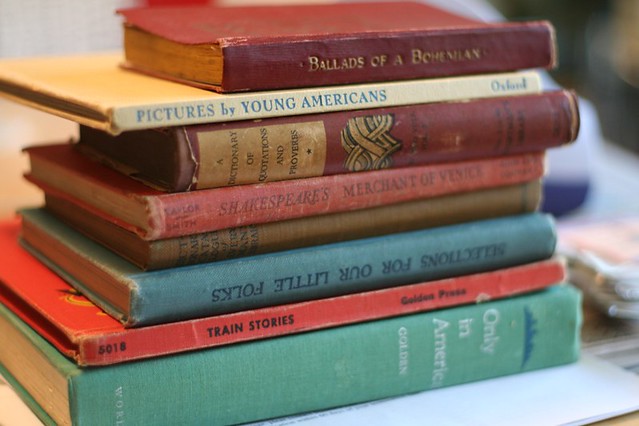
Image result for books
 Edwards, Ali. (2007) books.  Web:Flickr

Works Cited

World Atlas.com Accesed 10/1/2016 “25 Most Illiterate Countries”http://www.worldatlas.com/articles/the-lowest-literacy-rates-in-the-world.html

Humainium.org Accesed 10/1/16 “Right to Education”http://www.humanium.org/en/world/right-to-education/

Dosomething.org Accesed 10/1/16 “11 Facts About Education Around the World” https://www.dosomething.org/us/facts/11-facts-about-education-around-world

Savethechildren.org Accesed 10/1/16 “ South Sudan”
http://www.savethechildren.org/site/c.8rKLIXMGIpI4E/b.6150459/k.96D1/South_Sudan.html