Pages

Saturday, October 28, 2017

Photos: The Holy Grail of Preservation

The final unit of our Population class we discussed and learned about how populations grow and change. We took a trip to the Peggy Notebaert Nature Museum to view the change of population among butterflies along with seeing the change of Chicago from a nature preserve. For our last unit we created a very short and small one day action project that focused on methods of preservation. I decided to write a short essay about photography and what it has done for us in terms of preservation. I hope you enjoy; thank you. 

Photography has been around for a long time without a doubt; with the oldest camera being made in the 1500s. This camera was called the Camera Obscura and was the first pinhole camera. This camera would let in a small amounts of light through a small hole in a very dark area. The image would be projected onto the wall and would be traced out with pencils or paint. Photographs and pictures are a simple way of preserving the look of something; they are a visual time stamp.

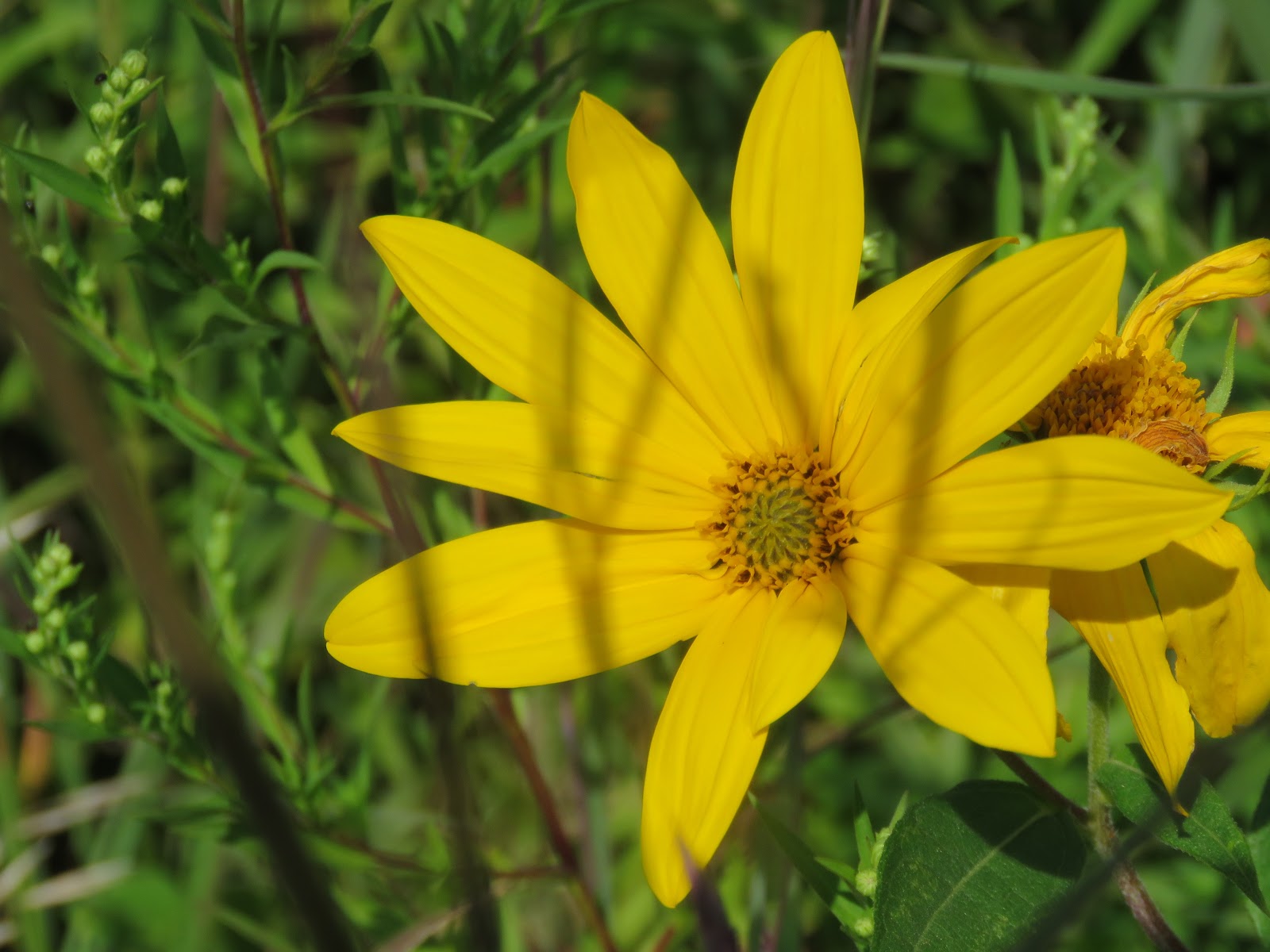
In the image below we are clearly able to see what it's attempting to show. Photography is great for preserving the specific look of a thing compared to a written description. If someone were to write about the look of the yellow flower it would probably take a long time to get all the specifics of the flower. Taking a photograph is a much simpler way obtaining the the look of something with detail and precision. A picture is worth one thousand words. Without photographs, many people wouldn’t know what a polar bear looked like.


IMG_2391.JPG
IF 2017 "Yellow Fellow"

Photography is a very useful tool as a preservation method. Photography can help scientists get an accurate description of an organism's physical traits, the habitat it lives in, and the organism’s resources. Drawing works the same as photography but it’s less efficient and can’t gather specifics and dimensions like photos can. A still photo for the most pat can’t be wrong with the the dimensions of a thing, drawing can be inconsistent and the look could be changed due to human error. Sight is one of the most useful traits for some organisms; making photographs very helpful for seeing something that is potentially dangerous without actually going face to face with it. Photography has helped us preserve the look and the behavior of organisms for a very long time.

Luke Skywalker and Malcolm X: Their Journey

The last action project for our Stories class we focused on explaining the stories and journeys behind fictional and real heroes. I decided to pick some very important heroes with one being a knight that needs to save a princess and gets involved in intergalactic warfare and a civil rights activist and leader that has had conflict filled history. I chose Luke Skywalker and Malcolm X's journeys to show what each journey looks like as heroes.

Luke Skywalker and Malcolm X are without a doubt very different people with very different views and stories but in a way can be looked in the same light. Luke goes on a journey of self discovery and fights for people who are being oppressed by the Empire. In a way Malcolm X did the same; Malcolm X wanted people to fight against an oppressing force. This is the main thing that makes these two people some similar and makes them like many heroes. Heroes typically fight against something that is unjust and is for other people. I hope you can recognize the similarities between not just Malcolm and Luke but all heroes in general. I also hope you enjoy reading about Luke and Malcolm's journeys as heroes.   


Citations

Ford, Ed. “Malcolm_X_NYWTS_2a.” Commons.wikimedia.org, 7 Feb. 2008,

Hiller, Herman. “Malcolm X NYWTS 4.” Commons.wikimedia.org, 23 Oct. 2006,

Kloske, Tim. “Dueling lightsabers.” Commons.wikimedia.org, 3 Feb. 2010,

Lemos, Manoel. “R2-D2 & Luke Skywalker.” Flickr.com, 21 June 2007,
“Malcolm X.” Wikipedia, Wikimedia Foundation, 27 Oct. 2017,

Shabazz, Malik. “Malcolmxm1carbine3gr.” Commons.wikimedia.org, 14 Oct. 2011,

Trikosko, Marion S. “Malcolm X March 26 1964 cropped retouched.” Commons.wikimedia.org, 12 Feb. 2016,
Wolfson, Stanley. “Elijah Muhammad NYWTS-2.” Commons.wikimedia.org, 4 Nov. 2014,

Tuesday, October 17, 2017

Chil Flamingo: A New Threat

In the second unit of our Population class, we learned, practiced, and discussed several math concepts from finding standard deviation to mean, median, and mode to combination/permutation. We also learned a lot about our animals and evolution. Evolution was another really big focus of this unit. We discussed how evolution happens, what and why specific traits stay, and how that effects a species. I really enjoyed this unit because it went deep into evolution and made sure I got a good grasp of the content in this unit. For this action project, I created a presentation and predicted and hypothesized what could happen if a predator was to move into the Chilean Flamingo's habitat. I hope you enjoy the learning about what traits would work well for flamingos with a different predator.

IF "Open" 2017


Math Concepts

I assumed the height of my different flamingos and put them into a list so I can measure how far our outlier are from the center. The average height of a Chilean flamingo 43.2 in -51.6 in

Mean- 47.27      Median- 48        Mode- 48      Range- 9.59     Maximum- 51.6

Minimum- 42      1Q- 44.4           3Q- 49.5 


1. John- 48 in 
2. Carla- 49.2 in
3. Hubert- 44.4 in  
4. Robert- 46.8 in 
5. Leah- 48 in 
6. Michael- 42 in 
7. Max- 43.2 in
8. Ethan- 50 in 
9. Joseph- 51.6 in 

Standard deviation 

The standard deviation of the data tells us what percentage of the flamingos are in a certain height range.
Mean = 47.27
S= 3.13 

IF "Standard Deviation" 2017

68% of the flamingos = 44.14 in - 50. 4 in
95% of the flamingos = 41.01 in- 53.53 in
99% of the flamingos = 37.88 in- 56.66 in

This picture shows that the 99% of the 9 flamingos we chose land in between the heights of 37.88 inches and 56.66 inches. 95% of the 9 flamingos are between the heights of 41.01 inches and 53.53 inches. 68% of the 9 flamingos land between 44.14 inches and 50.4 inches in height.

Combination and permutation

For finding the combination, I found that introducing the flamingos into a new environment doesn't matter; making the situation a combination. Shown in the photo below is the work that I did to find the permutation and combination of my set. Their are 9 animals in my set making the "n" = 9. I chose three flamingos to possibly survive making my "r" = 3.
IF "nPr" 2017

Citations


Arpingstone. "Slimbridge chilean flamingo". 2004. photograph  

Bjoertvedt. “Phoenicopterus Chilensis LoroParqueTenerife Chilean Flamingo IMG 5181.”Commons.wikimedia.org, 22 Feb. 2015,                                                                  

Bjoertvedt. “Phoenicopterus Chilensis LoroParqueTenerife Chilean Flamingo IMG 5187.”Commons.wikimedia.org, 22 Feb. 2015,     

Cole, Sandy. "Chilean Flamingo juvinile SMTC". 2012. photograph 

Dominic Sherony. “Western Grebe Swimming .” Commons.wikimedia.org, 30 Nov. 2008,
Grider, Angela. “ZAFlamingo.” Commons.wikimedia.org, 8 Sept. 2006,      

Ltshears. “Chilean Flamingo.” Commons.wikimedia.org, 15 Nov. 2013,     

Lydekker, Richard. "The royal natural history." IV, Warne, 1922. - Flamingos are related to smaller birds.

A Fox to a Cub

In this second unit of our Stories class we focused on what it takes to make Fable. I really enjoyed this unit because it was very interesting. We discussed the characters and traits of those characters in common and less-common fables out there. This unit and action project allowed us to explore a lot of creative options within our writing. In my action project I decided to write about the small dangerous adventure of a brown bear cub. The cub learns a very important lesson along the way but the cub's brothers learn a more important lesson. I hope you enjoy the Fable and maybe even learn a lesson along the way.


A Fox to a Cub

Once there was a small bear cub, his name was Pelo. Pelo was very small, very cute, and very curious. Pelo lived with his brothers and sisters. His two brothers didn’t like him very much because he got the most attention from his parents because he was so young and small. His two sisters loved to play with Pelo; they especially loved to play a game called Far. To play Far one person traveled into the forest to pick up items and bring them back to meeting place. The first bear to bring all the objects back would win. Mama and Papa bear didn’t like when the cubs played this game because they feared that the cubs would get lost in the dangerous forest.

One day the oldest cub suggested, “How about we try something new, maybe something more challenging.”
“Like what?” replied the other sister cub.
Pelo was waiting impatiently for his older sisters to decide what special object they would need to find. He really wanted to play, so he tried to pick something for the sisters to speed up the process. Pelo looked around impatiently to get an idea of what to find. Out of the corner of his dark brown eyes, he focused on the center of daisy and he immediately thought of the soft color of cheese.

“What about cheese?” Pelo softly asked.
“ I don’t know, doesn’t that seem too hard.” replied the older sister.
“Seems pretty simple to me.” said the younger sister .
“Okay, I guess” replied the older sister.
Pelo smiled with joy, and started hopping in excitement on his small paws.
“3, 2, 1, GO!” said the younger sister.

Immediately the cubs darted into the forest to find cheese, bring it back, and be crowned the winner of this special game of Far. Pelo eventually got tired of running and decided to walk. He walked for 9 minutes. Pelo eventually started to smell a familiar smell. It was CHEESE! Cheese was stuck in the cub’s mind, he ran deep into the forest to find the source of the scent. All of a sudden Pelo saw a small piece of cheese sitting on a rock.

“I found it! I win!” Pelo yelled out loud.

After Pelo yelled he noticed a large fox standing by the cheese that he didn’t see before. This terrified Pelo but he was too scared to move. The fox saw Pelo standing in fear and saw this as the perfect opportunity to upgrade his lunch from a single piece of cheese.

“Well hello there small bear”, the fox said. “ What is a small cub like you doing in the middle of the forest all by yourself?” Pelo couldn’t respond. He was frozen in shock.
“Well the darn thing must be broken, it won’t even talk nor will it move”, the fox said. “ Would be a shame for such a beautiful cub to go to waste. I guess I should use it myself, maybe as lunch.”

Pelo didn’t like the idea of being the fox’s lunch so he responded and backed up from the fox.
“I’m not sure that’s a good idea, I have a family who will do the same to you if you eat me.”
“Where are they now, I don’t see any hungry bears around,” replied the fox.
“They will come.” Pelo snapped back.
“ You are very brave for such a young cub.” replied the fox in a humble voice.
“ I must get it from my Papa, who you’ll be meeting very soon.” Pelo said in a stern voice.
Out of nowhere there was loud thumping coming towards the fox and the cub.
“That must be them now” said Pelo in a worried voice. He couldn’t be sure if it actually was his family there to rescue him from the fox.
Out of the leaves Pelo’s two older brothers popped out of the leaves to help Pelo.
"What is going on here?!”, yelled the oldest brother.
“We were just having a friendly conversation about my cheese” the fox worriedly replied.
“HE IS TRYING TO MAKE ME HIS LUNCH!” screamed Pelo as he cried and stumbled towards his brothers.
Pelo’s brothers grew angry at the fox and wanted to attack him.
“ Look, How about I take the cub, and you two can have all the cheese, berries, and fruit you would like.”

The brothers like the sound of having an unlimited amount of food. The two brothers talked and turned away from the fox to discuss the offer. Pelo was now
more frightened than comforted at the presence of his brothers.

Though the brothers were jealous and didn’t really like all the attention that Pelo got from his parents, they decided that their little brother was worth more than unlimited food. They rejected the fox’s offer and scared him away. The Brothers all walked and talked back home. Before they left, Pelo took a good look at the cheese that the fox left. He decided to leave it for the next cub to come by. They talked about how important family is and why it was so important to be safe in a dangerous world.

IF "Fox and cub" 2017


Family always comes first, and needs will be more helpful than wants. 
Thursday, September 28, 2017

The Creation of Aleph

In this this first unit of our new class Stories we discussed what made a story interesting and engaging. We talked about how it was necessary to include a lot of detail/ descriptive words to show off the world you are creating. We had two field experiences in this unit, one was inviting a storyteller over and tell us stories while explaining the important elements of one. This really helped me create my story because it gave so many examples. My job in this unit as to create a story that would demonstrate the creation of a world. I decided to name my world Aleph. Aleph isn't like a lot of other religions and creation stories out there, this story starts with an element and how this element created a world like our today. I hope you enjoy. 

The Creation of Aleph

Before there was anything existed, there was water. Water was the basis of everything that was ever created. Water was infinite and had a state of consciousness; Water floated in the universe she didn’t know what she was part of. Water didn’t like living alone, there was nothing for her to do, and nobody for her to talk to. Water solved this problem by creating air and gases. She talked with air for long periods of time, the everlasting conversation created waves across the water. The air and the water got into a discussion about creating land, so they did. They wanted to see the world bloom and prosper, so they created people using themselves. The people of the world were birthed underneath the sands of the beaches by water herself. The people of the land built homes and planted farms. Water and air wanted to name their amazing creation, after all the people of the world want to know what to call their land.

The air and the water got into an argument about what they wanted to call this world. The Water wanted to call their world Aleph, while the air wanted to call the world Dependence. Naming the world Dependence made Air feel powerful. The Water wanted to name the world Aleph because she believed that the world would be ever expanding in the universe she created, and the sentient beings would create their own infinite pathways. Aleph comes from the math term of the same name that shows sets of infinite. The Air wanted to name the world dependence after the their relationship with the beings on the world. The beings depended on the Water and the Air to support them. The Air and the Water turned to a hostile relationship.This tension and frustration between the Air and the Water caused rows of mountains to pop up and stab through the land like spearheads. The mountains were giant rocks that towered over the trees and plants. The mountains had massive hills that gave off the appearance of the giants kneeling down. These great mountains were new to the humans; they fearlessly and without caution explored the mountains.

One day, Shamun visited the mountains, he wanted to know why they were shaped as giants. Little did Shamun know that these mountains had come from conflict between his creators. The mountains were the home for air and water’s anger. Shamun came to the mountains while Air and Water were arguing. This arguing caused a windstorm in the mountains that caused Shamun to fall to his death. This was the first time that a human had died because of the two creators. The people eventually found out about the death of their friend. The town fell into a deep depression; people walked slowly with their heads down in mourning. The town ha an eerie sense of quiet and emptiness. People sadly did their duties to keep the town running in a town of sadness. Plenty of people have died since the creation of humans, but the death of Shamun was special because the people usually get words from Water and Air about their life and the individuals afterlife while Shamun didn’t receive any words from Water and Air. They felt like Water and Air had forgotten about the world and the people they created.

This depression caught the eyes of Air and Water. Air and Water discussed for 3 days about how they wanted to repay the village for their terrible mistake. They were so concerned that about the morale of the village they stopped bickering. Water told the people of the village of their terrible mistake and told the people about Shamun’s afterlife. Air came to realize that the world they created wasn’t about dominance and that it was instead about love for each-other. Water an Air discussed about adding a temple for Shamun into the world, this temple would represent the similarities between man and their creators. We argue and make mistakes, none of us are greater than the other. They built the temple on the mountain where Shamun had fell. The temple was positioned right on the mountain's backbone; this clearly showed that Water and Air were the support for the people and that the people were their creators support. The temple smelled like roses and baked goods that Water and Air delivered everyday. The temple was a haven for people to connect with one-another and their creators. Air told Water that the world should be named Aleph instead of Dependence, Water agreed. This world would be named after the countless mistakes, corrections, questions and possibilities that the world would endure throughout time. This world would be named Aleph.  

Trail for travelling

I took this photo to show where the village's trail which would allow the people to reach the temple. 

"Trail leading to temple" IF 2017

Artist's statement

This action project wasn't very difficult; I found out to be pretty simple to write a creation story with a lot of creative involvement. The most difficult part was trying to implement my creative input into the story without getting in the way of the necessary elements like the last feature. I really enjoyed writing this story, I couldn't begin to describe how happy I was when I had put everything together like a puzzle. I enjoyed learning about these new concepts and genre of literature. 

Wednesday, September 20, 2017

A Chil Flamingo

In this first unit of our new class Population, we focused on creating an art piece of an organism of choice. Our class visited Lincoln Park Zoo to view our organisms. I really enjoyed seeing multiple Chilean flamingos together; I was able to see how they communicated and expressed themselves as well as their physical traits. I gathered photos of the flamingos to examine and view their morphological characteristics that put them in their taxonomic levels. I also created an art piece of the Chilean flamingo to show of where these taxonomic traits are on the flamingos. I really enjoyed this first unit, especially when we learned about set theory and how that correlates to the organisms being placed in categories. I hope you enjoy learning about his interesting first unit.

Taxonomy
First, I created a table to specify the taxonomy of a Phoenicopteriformes chilensis (Chilean flamingo). You will notice that the Genus and species have the same taxonomic description because a Chilean flamingo is the only animal within its genus.


Taxonomic classifications
Taxonomic level
Taxonomic description
Kingdom
Animalia
Sexual reproduction, eukaryotic, multi-cellular.
Phylum
Chordata
Has a spinal cord.
Class
Aves
Toothless beaked birds, hard laid eggs, feathers
Order
Phoenicopteriformes
Long legged, stout bills
Family
Phoenicopteridae
Dipped bill, water wading capabilities
Genus
Phoenicopterus
A specific dipped shape to their bill
Species
Phoenicopteriformes chilinsis
Originating from Chile, can reproduce offspring that is also capable of having offspring

Taxonomy Art Piece
The next step was to create an art piece that would show where the  specific taxonomy traits were being shown off. I decided to draw a Chilean flamingo. The taxonomy traits and where they are located are shown off in the image below.
" C- Flamingo taxonomy traits" IF 2017
Venn diagram Comparisons 
Next I created a Venn-diagram to show off the likeness and differences between the animal that I chose versus animals that my classmates chose. One of my classmates chose to do research on a Fennec Fox, while another did research on polar bears. Feel free to view their blogs afterwards. While creating this Venn-diagram I found that its pretty difficult to find similarities between Chilean Flamingos and Polar bears and Fennec Foxes, mainly because two are mammals while the other is a type of bird. This is good information, we want to truly show off how unique these animals are.

"Flamingo comparison Venn diagram" IF 2017
Set Theory 
Then, I created a set of set theory statements that describe the relations between Chilean flamingos and the bird's taxonomic traits.

F(traits of flamingos)= {can fly, bill, two legs, lives in flocks, pink}      
B(traits of birds)= {wings, teeth-less, hard eggs, endothermic, feathers}

1. F∩B = {feathers, hard eggs, wings, endothermic, teeth-less}
2. {feathers, hard eggs, teeth-less} ∈ F
3. {beak, herbivore, lives singular, green, mammal} ⊂' F
4. F⊂B
5. F∪B = {feathers, wings, teeth-less, endothermic, hard eggs, two legs, pink, lives in flocks, bill, can fly}

Photography
I also managed to snap a photo of a Chilean Flamingo at Lincoln Park Zoo. I used this photo a reference for my art piece. I gathered some interesting information about how Chilean flamingos live and interact. I found that Chilean flamingos are pink because of a natural pink dye called canthaxantin is in their diet of shrimp and blue-green algae. Wild Chilean flamingos also live in massive groups where they feast on shrimp. Flamingos are essentially defenseless against other larger creatures, so they live in very larger groups:400 flamingos are way more intimidating than 20.

"Chilean Flamingo" IF 2017
AP conclusive
Overall this unit was very enjoyable, I thought going to Lincoln park zoo was a pretty necessary FE for me and the class. There wasn't anything in this unit that I didn't like, The workload felt perfect an the unit went at the perfect pace for me. We got a lot of time to work on this action project, and a lot of time to complete our work and get a good grasp of the content in the class. I'm happy with how my action project turned out. I was able to take some great picture of Chilean flamingos and learn some new information about them. I didn't really struggle with this action project too much because I was able to understand the topic and concepts pretty efficiently. Thanks for viewing this blog and feel free to check out my classmates research on animals.

Citations:

BirdLife International. 2016. Phoenicopterus chilensis. The IUCN Red List of Threatened Species 2016: e.T22697365A93610811. http://dx.doi.org/10.2305/IUCN.UK.2016-3.RLTS.T22697365A93610811.en. Downloaded on 24 September 2017.

“Phoenicopterus chilensis .” Phoenicopterus chilensis (Chilean Flamingo), www.iucnredlist.org/details/22697365/0. Accessed 24 Sept.2017.

Wednesday, May 31, 2017

WARNING GMOs INCLUDED

In our final unit of our Food class we focused on percent changes and GMOs. In this action project I present my opinion on GMOs and why they should be banned. I present some facts on how they negatively affect communities, farmers, and the environment. I really enjoyed this unit because we gt to see some great field experiences, like one to the Green City Market. I hope you enjoy.

Food: GMO Debate- IF from GCE Lab School on Vimeo.

95% of the United States’ grown sugar beets are genetically modified along with 94% of soybeans also being genetically modified. Soybeans are a large part of the American diet, so having this alarming amount of genetically modified soybeans brings up risks that can still be solved. GMOs should no longer be put into the diets of the global population. GMOs are expensive to both the farmer and the people buying it. GMOs make food desserts more common while also creating monocultures.

Genetically modified foods can be very expensive for farmers and various buyers of the foods. Farmers are sinking into debt with their equity decreasing and their debt levels rising 5.2% in 2017. Growers first sign a contract with a company that will sell their food but the equity rates keep getting lower and lower so the farmers fall into debt and they can’t leave the contract otherwise they won’t get paid. Genetically modified food is also affecting consumers of the products. Most foods that are genetically modified tend to be unhealthy, which is difficult for families to deal with. When you are a low income family your number one choice would be to buy food that is both filling and cheap instead of the expensive and small. The filling and cheap foods are so mass produced that the small healthy foods need to compete against the mass produced unhealthy foods. Still being a low income family you eventually need to cope with the unhealthy diet and obtain expensive medication. None of this would be necessary if GMOs were banned in food products.

GMOs can also cause food deserts where it can be difficult to obtain healthy foods. Food deserts typically exist in low income areas where people don’t have the money to buy locally grown food that isn’t just genetically modified foods that have been stuffed with preservatives. The low income areas usually obtain their food from cheap places that is filling and cheap, like I mentioned in the last argument the filling and cheap meals aren’t local and aren’t healthy causing these families to be unhealthy or overweight. GMOs lead to food deserts because genetically modified foods get put into low income communities so they have lower prices than organic food. Organic healthy food doesn’t sell at high prices when you can still get inorganic GMO food at low prices in low income communities, therefore making unhealthy food deserts.

Genetically modified foods are also creating monocultures. Monocultures are when one type of plant is being grown way too much and if a disease were to happen then it could possibly destroy that entire species for a short time period. GMOs cause monocultures by creating a high demand for one type of food like corn. This high demand of corn is making farmers grow more corn; the more corn grown the higher the risk of a disease wiping out the large amount of GMOs. Potatoes in Ireland fell due to a monoculture in the 1840s and the Irish starved because of it; this will most likely not happen as drastically as it happened to the Irish but it will impact us if corn gets wiped out. Corn is in everything from pop tarts, batteries, magazines, and cereal. Monocultures definitely will not be helping out our global food system.

This graph represents the rising amounts of corn being grown in Iowa compared to other foods. Orange represents the total  amount of cropping land corn is taking up. This data is only taking place in the years of 1956 - 1962. The percentage of total cropping land being occupied by corn is at 60% in 1956 an it had gone up to 64% in only 6 years; this is a percent increase of 4%. Both percentages show that we already have over half of all the pants being grown into a monoculture.

"Graph" IF 2017
A common argument use among GMO supports is that using GMOs are cheaper than growing organic food. It may at first seem this way but there are actually a lot of underlying cost to farmers. Farmers are buying GMOs, pesticides, and herbicides to grow the best plants. The more we implement GMOs into our food the more costly it gets for farmers. 

Genetically modified food should no longer be dispensed to the public because even if it is labeled it will inevitably be the number one choice for a lot of lower income people. These low income people suffer from both an unhealthy diet and can’t travel to get a better one when living in a food desert. Above all genetically modified foods are still being used today, but the underlying truth of the damage it has caused has greatly affected everyone. GMOs need to be removed from the shelves of stores and in the hands of fast food companies and replaced with local organic foods that are safe for everyone. GMOs need to be removed from food for the betterment of our low income communities and to lower the risk of a food wipe out.

Food, Inc. By Robert Kenner, Robert Kenner, Robert Kenner, Richard Pearce, Eric Schlosser, Eric Schlosser, Melissa Robledo, William Pohlad, Jeff Skoll, Robin Schorr, Diane Weyermann, Elise Pearlstein, Elise Pearlstein, Kim Roberts, Kim Roberts, Michael Pollan, Michael Pollan, Gary Hirshberg, Joel Salatin, and Mark Adler. Dir. Richard Pearce. N.p., n.d. Web. 29 May 2017.

Weise, Elizabeth. "Genetically engineered foods Q & A." USA Today. Gannett Satellite Information Network, 28 Oct. 2012. Web. 29 May 2017.

"Assets, Debt, and Wealth." USDA ERS - Assets, Debt, and Wealth. N.p., 17 Mar. 2017. Web. 29 May 2017.