Showing posts with label Water. Show all posts
Showing posts with label Water. Show all posts
Friday, October 28, 2016
The Climate of Sydney, Australia
In the third unit of our H2O class we made a slide presentation that shows the climate of different cities in the world and their predicted climate. Throughout the unit we learned about different types of clouds that form and the type of climates that they form in. We also learned what it means to deal with the affects of the climate change, like how certain places deal with long term effects and others are irreversible. I enjoyed doing this unit because it helped me get a good understanding of what major effects climate change can have on certain areas and how it can change the way we live and how much it can crush the ecosystem if we don't solve this problem.

Monday, October 10, 2016
Creating Clean water
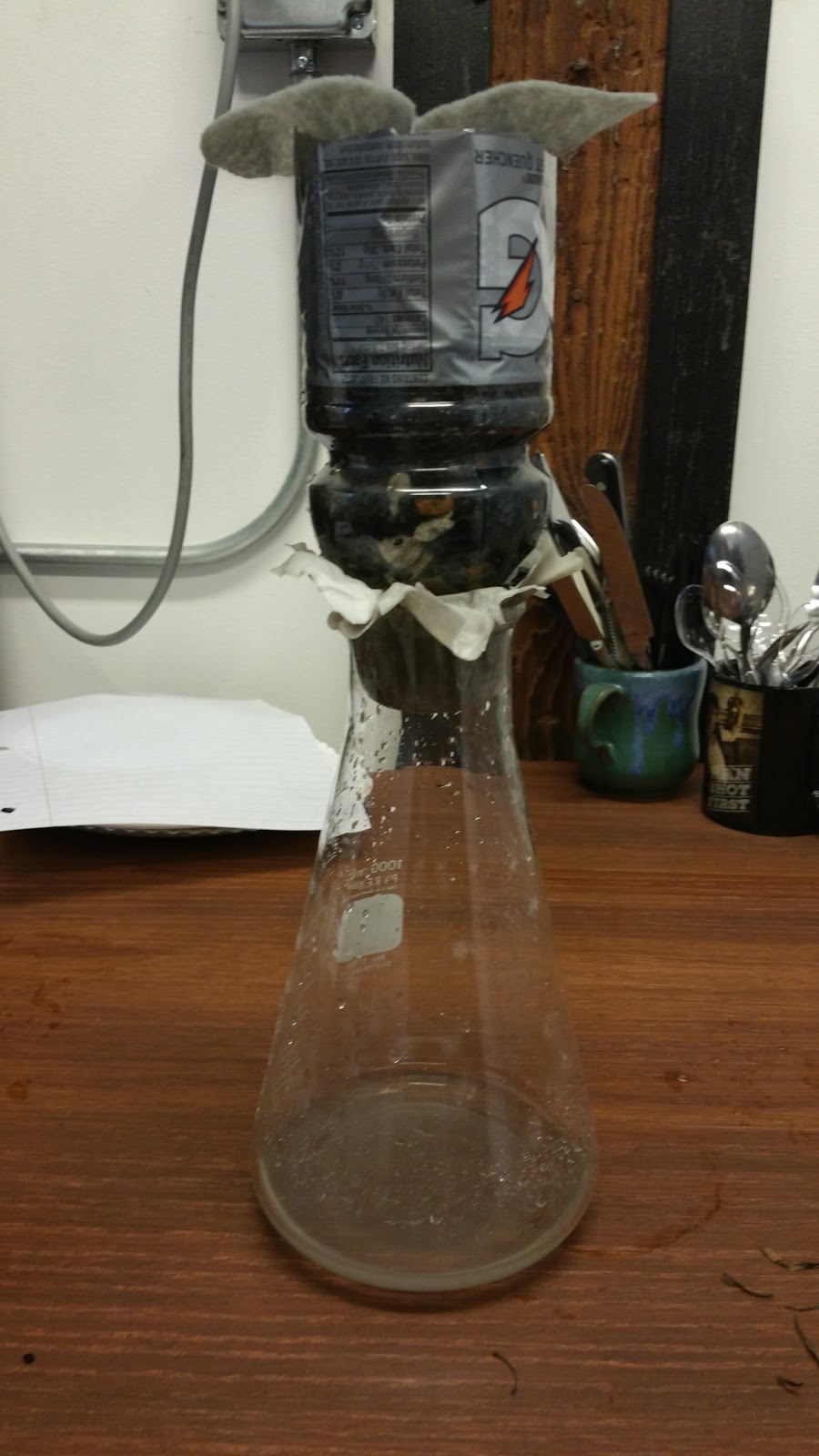
In unit 2 of my Water class I had to make a water filter that would clean water in any way. My water filter is the one below, and I used a few materials to make the filter. Using only small pieces of activated carbon, large gravel rocks, small gravel rocks, and cloth I was able to change the original water’s pH from 3.8 to 4.6 which are both very acidic. I originally thought that the water filter was going to go worse than it did, because the first time I tried to make the filter all the materials mixed together which is not what you want when making a filter.
I built my water filter using the materials I listed earlier, bottle, and scissors. First I cut a hole in the top of the bottle and cut the bottom off, then screwed the top of the bottle back on. Then I filled it with the needed layers with the charcoal first, small gravel rocks second and large gravel rocks third. Next I put the cloth on the top of the bottle covering up the hole and one at the top covering up the cut. A water filter that simple had the highest pH difference in my class. I was really pleased by how the filter turned out. I had the perfect amount of materials and the wrong and right plan to get the job done. It’s pretty rewarding to fail and later get such a big success from a mistake.
To test how well my water filter would function I tested dirty river water from the Chicago river, and to really test how well the filter worked I added even more dirt to the water than there already was. The top layer caught all the large pieces and chunks of dirt that were in the river water, while the gravel and carbon caught the rest of the small pollutants. Once again, to my surprise there was a lot of clean looking water left over in the flask. The water that had gone through the filter was at a 4.6 level on the pH scale and was still pretty acidic and personally was not worth drinking nor would it be worth tasting. The water was still really murky and turbid which is another hint towards not drinking the water. Though the water did end up smelling much more close to tap water than dirt.
A lot of water filters work like groundwater filtration, were the water travels through a lot of materials through the ground. First the filter collected large pieces of contaminants and the smaller pieces of gravel collect small contaminants throughout the water. Acidic water tastes like metal most of the time so I imagine the filtered water tastes like metal.
Before pH test: 3.8 pH -log x =.8 10^.8 = x x= 6.31
After pH test : 4.6 pH
pH change : 0.8 pH
I built my water filter using the materials I listed earlier, bottle, and scissors. First I cut a hole in the top of the bottle and cut the bottom off, then screwed the top of the bottle back on. Then I filled it with the needed layers with the charcoal first, small gravel rocks second and large gravel rocks third. Next I put the cloth on the top of the bottle covering up the hole and one at the top covering up the cut. A water filter that simple had the highest pH difference in my class. I was really pleased by how the filter turned out. I had the perfect amount of materials and the wrong and right plan to get the job done. It’s pretty rewarding to fail and later get such a big success from a mistake.
To test how well my water filter would function I tested dirty river water from the Chicago river, and to really test how well the filter worked I added even more dirt to the water than there already was. The top layer caught all the large pieces and chunks of dirt that were in the river water, while the gravel and carbon caught the rest of the small pollutants. Once again, to my surprise there was a lot of clean looking water left over in the flask. The water that had gone through the filter was at a 4.6 level on the pH scale and was still pretty acidic and personally was not worth drinking nor would it be worth tasting. The water was still really murky and turbid which is another hint towards not drinking the water. Though the water did end up smelling much more close to tap water than dirt.
A lot of water filters work like groundwater filtration, were the water travels through a lot of materials through the ground. First the filter collected large pieces of contaminants and the smaller pieces of gravel collect small contaminants throughout the water. Acidic water tastes like metal most of the time so I imagine the filtered water tastes like metal.
Before pH test: 3.8 pH -log x =.8 10^.8 = x x= 6.31
After pH test : 4.6 pH
pH change : 0.8 pH
 |
| IF (2016) Before filtration |
 |
| IF (2016) After filtration |
 |
| IF (2016) Water filter |
 |
| IF (2016) Sketch of filter |
 |
| IF (2016) Sketch of pH scale |
Tuesday, September 20, 2016
The Drain on water
The first Action project of the year is in my water class, and our job was to create a poster to display our water use and compare it with other countries. Our Action Project this Unit is to take information about our daily water use compared to an average American’s daily water usage and another country. It was also meant to spread awareness about how much water people waste every day, and encourage people to save water.
 |
| IF(2016)The Drain on Water |
First I, found the total amount of water that I use every day which turns out to be 32 gallons per day. 32 gallons is a lot of water to carry home, especially when your house is 1.6 miles from the nearest water source. My total gallons is much less than than your average American use, which is held up at 151 gallons per day. I find myself pretty conservative when it comes to water considering I use less than a third of an average American. I made categories like Cleaning, Hygiene, Utilities and Other. No category goes over the average person in Norway’s daily water use.
For this Action project we also had a field experience that focused on carrying water long distances. We carried 25 gallons of water for a ½ hour and walked 1752 ft. Sure it doesn’t like much, but when you try it it feels as if your leg and back are being hit with rocks. We traveled to our closest freshwater source( the Chicago River) so we could experience the difficulty of carrying your total daily water use for not even nearly as far as the distance people need to actually deal with to survive. When water isn’t accessible as we Americans have it they need to walk long distances like 16 miles everyday just to have a human right to survive. This is a real struggle especially when it comes to people who are not in a good situation financially. So I ask you, how much water would you need to carry if you had to walk to water everyday? How much water do you think you could save everyday only using the necessary amount you need to use everyday?
Works Cited:

Subscribe to:
Posts (Atom)